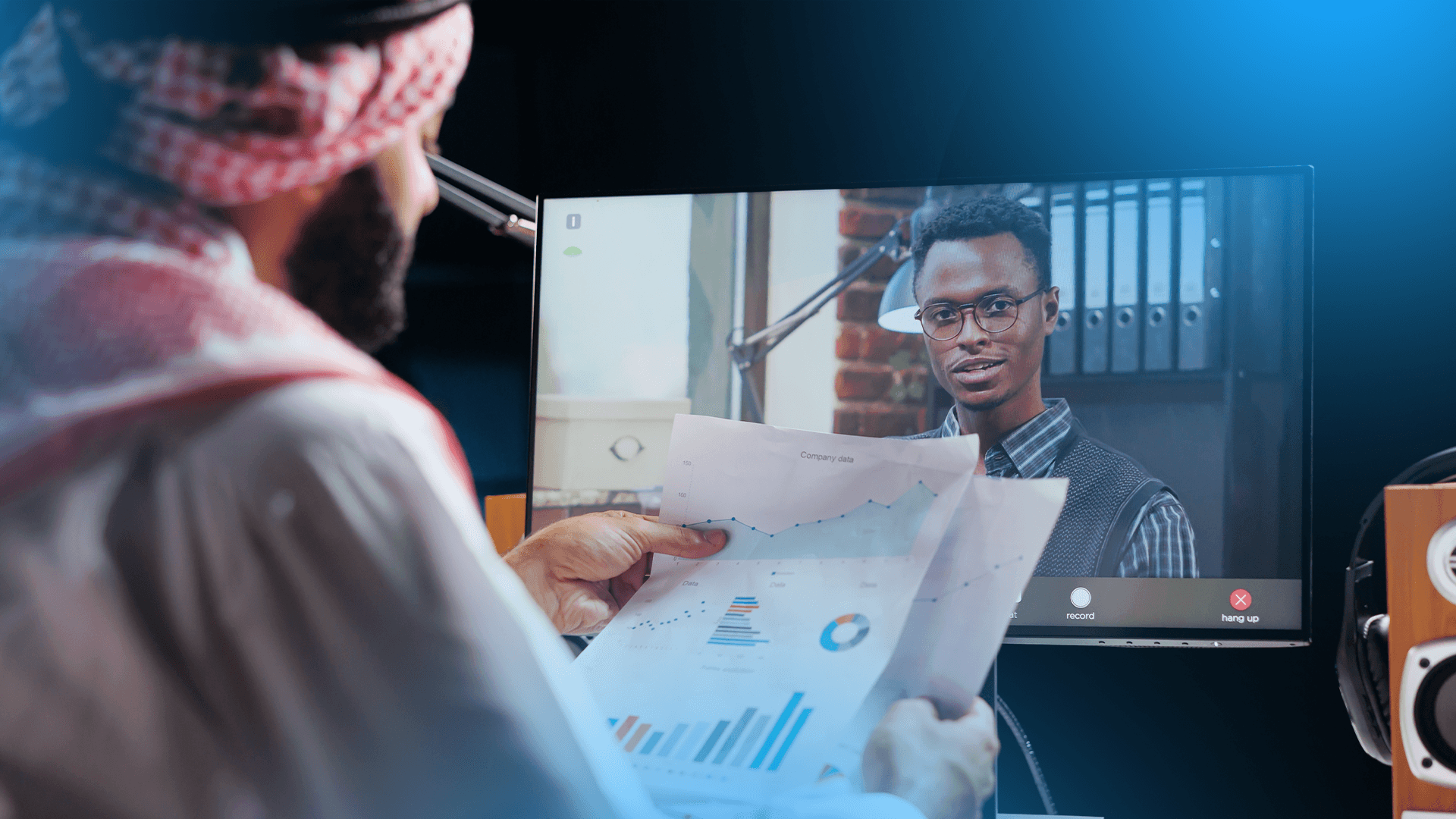
Remote Work Security Solutions UAE | Secure Hybrid Workplace IT
May 19, 2026 • 5 min read
A few years ago, asking your entire team to work from home felt like a crisis measure. Today, it's just Tuesday.
Hybrid work has become the default across most industries in the UAE, and businesses that figured out the right remote work security solutions UAE approach early are in a much stronger position than those still scrambling to patch gaps. If your company has remote or hybrid employees and your security setup hasn't been seriously reviewed in the last year, this article is worth your time.
Let's talk about what's actually happening, what the real risks look like, and what smart businesses are doing about it.
The UAE Remote Work Shift Is Real, And So Are the Risks
Dubai, Abu Dhabi, Sharjah, businesses across the UAE are running teams that split time between offices, homes, and while traveling between client sites. The flexibility works well for most organizations. Productivity holds up, talent pools expand, and operational costs often drop.
But there's a side of this shift that doesn't get enough honest attention: every remote employee is essentially a new door into your company's systems. And unlike a physical office door, you can't always see who's standing at it.
The businesses that treat this seriously aren't paranoid, they're just realistic. Cybersecurity across the UAE have grown sharply over the past three years, and remote workers are frequently the entry point. Not because employees are careless, but because the environment they're working in, home networks, personal devices, public Wi-Fi, was never built with corporate security in mind.
What Remote Work Actually Looks Like From a Security Standpoint
Picture a typical day for a finance manager working from home in Dubai. She logs into the company system from her personal laptop over her home Wi-Fi. She joins a video call, shares a document through a cloud platform, then opens an email that looks like it came from a supplier asking her to confirm payment details.
That email is fake. The supplier account was spoofed. And because she's working alone without a colleague nearby to quickly ask "does this look right to you?", she almost clicks the link.
This happens constantly. The office environment provided informal security that nobody really counted, the ability to walk over to someone's desk, the IT team being physically present, the general friction of having colleagues around you. Remote work strips all of that away and replaces it with individual judgment calls made in isolation.
That's not a criticism of remote workers. It's just the reality of how the threat landscape changed when everyone went home.
The Specific Problems Worth Solving
Home Networks Were Not Built for This
The average home router runs on factory settings with a basic password that hasn't been changed since installation. Internet service providers in the UAE set up residential connections for streaming and browsing, not for carrying sensitive corporate data. When employees connect to company servers through these networks, the data moving back and forth passes through equipment that offers minimal protection.
A hacker sitting in the same apartment building with basic tools and some patience can do real damage through an unsecured home network. This isn't theoretical, it's documented in incident reports across the region.
Shared and Personal Devices Create Serious Blind Spots
In many companies, particularly growing ones where budgets are tight, employees use their own laptops and phones for work. These devices run personal apps, skip software updates, and connect to networks the IT team has never seen. When something goes wrong on a personal device, the company often finds out far too late.
Even company-issued devices cause problems when they're not actively managed. A laptop that hasn't received a security update in six months is carrying known vulnerabilities that attackers actively look for.
Passwords Are Still a Serious Problem
Despite years of guidance, password hygiene remains poor across most organizations. Employees reuse passwords across multiple platforms, choose simple combinations they can remember easily, and almost never change them unless forced to. When one platform gets breached, and breaches happen constantly, those credentials get tested against hundreds of other services automatically.
In a remote work setup, where passwords are the primary line of defense for accessing company systems, this is a significant exposure that proper remote work security solutions UAE providers can help businesses address systematically.
Cloud Platforms Are Not Automatically Secure
Moving to Microsoft 365, Google Workspace, or any other cloud platform is generally a smart business decision. But buying access to a cloud service and configuring it securely are two completely different things. Default settings on most cloud platforms prioritize ease of use over strict security, which means businesses often end up with data accessible to more people than intended, sharing permissions set too broadly, and audit logs turned off.
The cloud itself is secure. The way most companies set it up is often not.
Phishing Has Become Dangerously Convincing
Modern phishing attempts look nothing like the badly written emails of ten years ago. They replicate real colleague names and email styles, fake legitimate service providers down to the logo and footer, and target specific individuals with information gathered from LinkedIn or other public sources.
Remote employees, who rely heavily on email and messaging rather than face-to-face interaction, are more vulnerable to these attacks simply because so much more of their work happens through digital communication channels where the risk is harder to spot.
Secure Remote Access UAE: The Foundation Everything Else Builds On
Before anything else, employees need a way to connect to company systems that doesn't create risk every time they log in. This is what secure remote access UAE actually means in practice, and it involves several components working together rather than any single tool.
VPN Configuration Done Properly
A VPN creates an encrypted connection between an employee's device and the company network. Traffic moving through it can't be read by anyone intercepting it along the way. The key word here is "properly," a poorly configured VPN can create a false sense of security while leaving real gaps open. The setup matters as much as the decision to use one.
Multi-Factor Authentication Across the Board
This is probably the single highest-impact change most companies can make, and it doesn't cost much. When logging in requires both a password and a second confirmation, a code from an authenticator app, a fingerprint, a hardware token, stolen passwords become far less useful to attackers. Most credential-based attacks fail immediately when MFA is in place.
The resistance from employees is usually "it adds an extra step." That extra step has prevented more data breaches than almost any other single measure.
Zero Trust: Stop Assuming Internal Means Safe
The old approach to network security assumed that anyone already connected to the company network could be trusted. That made sense when everyone was in the same building. It makes no sense when your network spans home offices across five emirates and three countries.
Zero Trust architecture works on a simple principle: verify everything, trust nothing automatically. Every access request gets checked regardless of where it comes from or who is making it. This sounds demanding, and it is, but for businesses with sensitive data and remote teams, it's the correct approach and a core part of any serious remote work security solutions UAE strategy.
Access Permissions Based on Actual Job Role
Most companies give employees more access than they need because it's easier than thinking carefully about who needs what. The problem is that when any individual account gets compromised, broad access permissions mean the attacker can reach far more than they should be able to.
Limiting access based on actual job responsibilities, and reviewing those permissions regularly as roles change, is basic good practice that many organizations skip.
Hybrid Workplace IT: Managing Two Worlds at Once
Running a hybrid team means your IT infrastructure spans physical locations and remote setups simultaneously. Without proper management, this becomes chaotic quickly, and chaos in IT is exactly where security problems hide.
Centralized Device Management
Every device accessing company systems should be visible and manageable from a central point. That means the IT team can see which devices are up to date, which are behaving unusually, and which need attention, without having to physically collect laptops from employees spread across the city.
When a device goes missing or an employee leaves the company, remote management tools mean sensitive data can be wiped before it becomes someone else's problem. This is one of the most practical benefits of investing in proper hybrid workplace IT infrastructure from day one.
Cloud Infrastructure That's Actually Configured Correctly
Proper cloud security means more than just choosing a good platform. It means setting appropriate access controls, enabling audit logging so suspicious activity gets recorded, configuring data loss prevention tools, and regularly reviewing who has access to what. Many UAE businesses skip this step entirely after onboarding to a cloud service, assuming the defaults are fine. They usually aren't.
Monitoring That Catches Problems Early
The difference between a minor incident and a catastrophic breach is often how quickly something gets noticed. Continuous monitoring of network activity, login patterns, and data movement means that unusual behavior triggers an alert while damage is still limited, rather than getting discovered weeks later during a routine check.
A login attempt from a new country at 2am, a large file download from an account that's never done that before, multiple failed authentication attempts in quick succession, these are signals worth catching early.
Backup and Recovery That Actually Works When You Need It
Ransomware attacks lock businesses out of their own data and demand payment for access. The only real leverage a company has against ransomware is a clean, recent backup that can be restored without paying anything. Regular backups stored separately from the main system, with tested recovery procedures, are what separates a serious disruption from a complete disaster.
Many companies have backups. Far fewer have backups they've actually tested restoring from.
Employee Training: The Investment That Changes Everything
Technology handles a lot, but human judgment is still involved in almost every successful attack. Someone clicks a link. Someone gives information to a convincing caller. Someone connects to company systems over an airport's public Wi-Fi without thinking.
Training doesn't mean lecturing employees about being more careful. It means giving them the specific knowledge to recognize what a phishing attempt looks like in their industry, what the correct procedure is when something feels off, and why certain behaviors that seem harmless, like forwarding work email to a personal account for convenience, create real problems.
Regular phishing simulations, where controlled test emails get sent to employees, show clearly where the gaps are without waiting for a real incident to reveal them. The results are almost always surprising, and the awareness that follows genuinely changes behavior. Companies investing in remote work security solutions UAE training programs consistently report fewer successful phishing attempts within months of starting.
What Agile ManageX Technologies Actually Does for UAE Businesses
Agile ManageX Technologies works with organizations across the UAE to build security infrastructure that fits how the business actually runs, not a generic package designed for a fictional average company.
The work starts with understanding the real picture: how employees connect, where data lives, what systems are in use, and where the current setup leaves gaps. From there, the team builds a security framework that covers secure remote access UAE configuration, endpoint protection, cloud security, monitoring, backup systems, and employee awareness programs.
They also handle compliance requirements, which matter in the UAE where regulations around data protection are increasingly specific and enforced. Getting that right requires expertise rather than guesswork.
For businesses already dealing with an incident, or those that have grown quickly and know their security hasn't kept up with their size, Agile ManageX Technologies also handles the kind of straightforward assessment that shows exactly where to focus first.
Their hybrid workplace IT expertise means they understand both sides of the equation, keeping office-based and remote employees equally protected under one consistent security framework rather than treating them as separate problems.
Practical Steps Any Business Can Take Right Now
Some improvements don't require a major project or significant budget, they just require making a decision and following through.
Turn on multi-factor authentication for every system that supports it. This is available on almost every cloud platform and can be done quickly.
Run a review of who has access to what. Look specifically for former employees, unused accounts, and people with broader permissions than their current role requires.
Make sure software updates are happening consistently. Every device accessing company systems, laptops, phones, tablets, should be running current versions with security patches applied.
Have an honest conversation with your team about phishing. Share a real example of a convincing phishing email and talk through what makes it dangerous. That single conversation sticks with people.
Check your backup situation. When was the last time you actually verified that your backups work and could be restored within a timeframe that wouldn't destroy the business?
Businesses serious about remote work security solutions UAE compliance should treat these steps not as optional improvements but as minimum operating standards.
The Honest Summary
Remote and hybrid work is here permanently. The businesses doing it well aren't the ones who avoided the security challenges, they're the ones who dealt with them directly and built systems that let their teams work flexibly without creating constant exposure.
The UAE's regulatory environment, combined with the genuine sophistication of modern cyber threats, means that treating security as optional is increasingly expensive, in breach costs, in regulatory penalties, and in reputational damage that takes years to repair.
Agile ManageX Technologies helps businesses get this right without overcomplicating it. Whether the need is for complete remote work security solutions UAE businesses can rely on long term, or targeted improvements to specific gaps in an existing setup, the goal is practical security that works in the real world, for real teams, dealing with real operational demands.
If your current setup hasn't been reviewed recently, that review is worth having before something forces the conversation.
Frequently Asked Questions
What do remote work security solutions actually cover?
They cover the full range of measures that protect company data and systems when employees work outside a traditional office, from secure network access and device management to employee training and cloud configuration.
Why is this particularly relevant for UAE businesses?
The UAE's rapid growth as a digital business hub has made local companies attractive targets. Strict data protection regulations also mean that security failures carry legal and financial consequences beyond just the operational damage.
What is secure remote access UAE and why does it matter?
It's the combination of tools and configuration that lets employees connect to company systems safely from anywhere. Without it, remote login becomes a vulnerability rather than a convenience.
What falls under hybrid workplace IT?
Everything that keeps a mixed remote-and-office team running securely, device management, cloud platform configuration, network monitoring, collaboration tools, and backup systems all fall under hybrid workplace IT.
How does multi-factor authentication reduce risk?
It means a stolen password alone isn't enough to access an account. The attacker also needs the second factor, which they typically don't have, making most credential-based attacks fail immediately.
Which industries in the UAE face the highest risk?
Healthcare, finance, legal, education, logistics, and retail all carry elevated risk, but any business holding customer data or running digital operations has something worth protecting.
Start the Conversation. Secure the Future.
Let’s talk before a preventable breach happens. Agile ManageX Technologies puts your business security first always.
Contact Us Today